

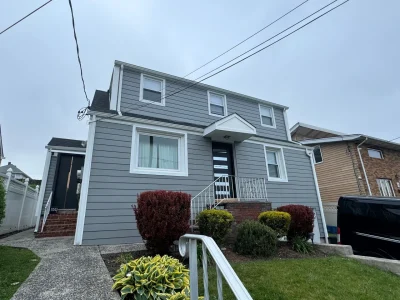
The best time of year for siding work in Succasunna is spring or fall, when the weather is steady and crews have more workable days. No season rules siding out, though. Industry installation standards do not ban cold-weather work; they change the method: below 40 degrees Fahrenheit the expansion gaps get wider and the cutting slows down. The real variable is whether your installer follows that.
Ask three contractors when to replace siding in Succasunna and you will hear spring, fall, and whenever you like. All three answers are defensible, which is why the question feels unresolved for most homeowners.
At Royalty Exteriors, we would rather explain the mechanism than hand you a month. Once you know what temperature actually changes about the installation, the timing decision makes itself.
This guide covers what the published installation standards require in cold weather and how to time a Morris County siding project around them. Contact us today to have your siding assessed and get a realistic window for the work.
What Actually Changes About Siding Work in Cold Weather?
Vinyl is a thermoplastic, which means it grows and shrinks measurably as the temperature moves. That single property drives almost every cold-weather rule in the trade.
The Vinyl Siding Institute’s installation manual puts the movement at the center of the method. Panels are never fastened tight to the wall; they are hung so they can slide as they expand and contract, and the gaps around them are sized for the temperature on the day they go up.
Install a panel on a cold morning with warm-weather gaps and it has nowhere to go when July arrives. The result is buckling and wavy courses, and the cause is not the cold itself but the spacing chosen in it.
How Does Temperature Change the Way Vinyl Siding Must Be Installed?
The published standard is specific rather than vague, which makes it easy to hold an installer to. Three requirements change or tighten as the temperature drops.
The Expansion Gap Below 40 Degrees
The Vinyl Siding Institute manual calls for a minimum quarter-inch clearance where panels meet corner posts, channels, and openings. That allowance exists so the siding can lengthen in summer heat without pushing against the trim.
When work happens in temperatures below 40 degrees Fahrenheit, the manual instructs installers to increase that clearance to three-eighths of an inch. The panel is at its shortest when it goes up, so it needs more room to grow into.
Fastener Clearance and Free Movement
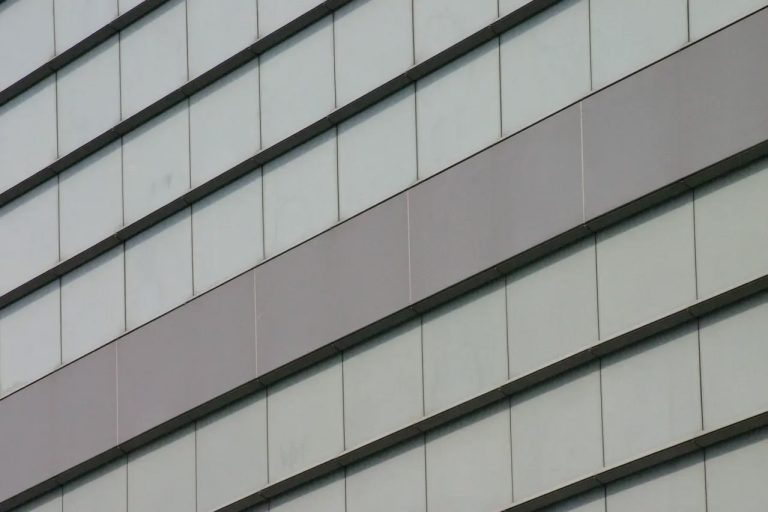 Vinyl siding is hung, not pinned. The manual is direct about it: do not drive the fastener head tight against the nail hem, and leave roughly one thirty-second of an inch, about the thickness of a dime, between the head and the panel.
Every panel has to move freely side to side once fastened. Tight nailing is the most common installation error in any season, and cold weather makes the consequences show up faster.
Cutting Vinyl in Cold Conditions
Cold vinyl is more brittle, so the cutting method changes too. The manual calls for a fine-tooth blade installed backward on the saw and instructs the installer to move the saw slowly through the material to prevent chipping and cracking.
That is a pace change, not a prohibition. A crew that keeps summer speed on a January install will produce chipped cut edges you can see from the driveway.
Why Are Spring and Fall the Best Time of Year for Siding Work?
Spring and fall win the recommendation on practicality rather than on physics. Mild, dry stretches produce more usable working days in a row, and a job that runs continuously finishes cleanly.
There is also a comfort factor for the house. Removing old siding briefly exposes the sheathing and any house wrap behind it. Most homeowners would rather that happen in mild weather than during a January cold snap or an August humidity spike.
Daylight matters more than most homeowners expect. Short December days cut the working window at both ends, and a crew that has to stop early leaves fewer courses fastened and covered before dark.
Availability cuts the other way, though. Spring and fall are when everyone calls, so the contractor you want may already be booked through the very months you were told to aim for.
Summer has its own trade-off in northern New Jersey. Panels installed at peak heat are already near their longest. Gaps that looked correct in August can open into visible seams once January arrives and the material contracts.
How Should a Succasunna Homeowner Time a Siding Project?
Timing is a balance between the calendar and the condition of the wall, and the condition of the wall usually wins.
Scheduling Around Damage That Cannot Wait
Failed siding is not a seasonal problem. Cracked panels, gaps at the seams, and loose courses let water reach the sheathing, and water behind a wall in winter is worse than water behind a wall in June. Once water is getting in, siding repair and replacement stops being a seasonal decision.
If you can see daylight, feel drafts at an interior wall, or find soft sheathing behind a loose panel, the repair sets the schedule. Waiting for spring to protect a wall that is already open costs more than the season saves.
Lead Time on Materials and Color
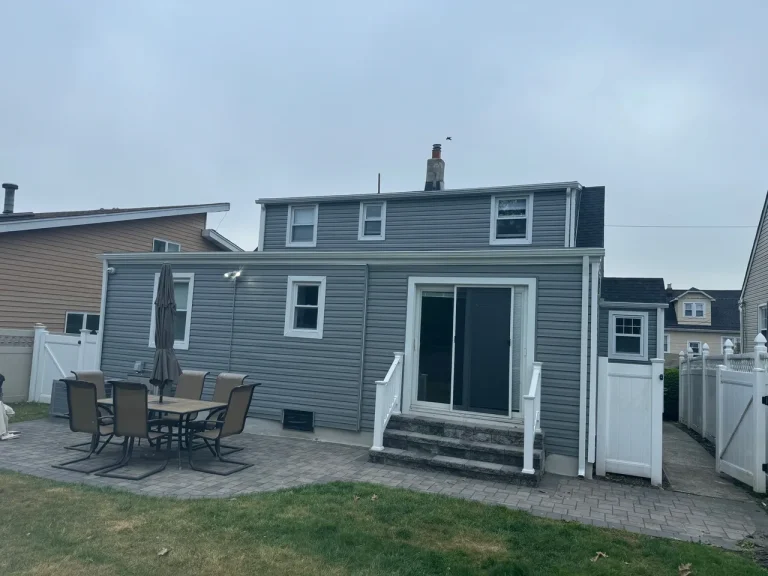 Common profiles and colors are usually available quickly. Specialty colors, thicker premium panels, and matching trim for an older installation take longer, and that wait sits ahead of the install date rather than inside it. A color you cannot get until March turns a February start into a March one.
Pick the product early. If you want the work done in a particular month, the material decision has to happen well before it. Confirm what is in stock before you settle on a start date.
What to Ask Before Booking a Winter Install
A winter siding job is a fair thing to book, provided the crew is doing it properly. Ask three questions and the answers will tell you what you need to know.
Ask what expansion gap they use below 40 degrees, how they adjust their cutting in the cold, and whether the panels will be allowed to warm before installation. A crew that answers those clearly has read the manual, and that tells you more than any month on the calendar. Vague answers are the warning sign.
Book Siding Work When It Suits Your Home, Not the Calendar
The best time of year for siding work in Succasunna is the season that lets a careful crew work without rushing, which is more often spring or fall than deep winter. At Royalty Exteriors, we install to the published standard in whatever month the work is needed, and we will tell you plainly if waiting a few weeks serves you better.
Many homeowners take on siding and roofing work in the same season, which saves a second round of setup and access. Call us today to walk your walls with us and pick a window that fits your home and your schedule.
Frequently Asked Questions
Can you install siding in the winter?
Yes. Published vinyl siding installation standards do not prohibit cold-weather work; they specify how the method changes, including wider expansion gaps below 40 degrees Fahrenheit and slower, more careful cutting. Winter installation is a question of installer discipline rather than a question of whether it is allowed.
What temperature is too cold to install vinyl siding?
The Vinyl Siding Institute manual does not set a stop temperature. It sets 40 degrees Fahrenheit as the point where the installer must widen the expansion clearance from a quarter inch to three-eighths of an inch. Individual manufacturers may publish their own limits, so ask which product is going on your house.
What is the best month to replace siding?
There is no single best month. Spring and fall usually offer the steadiest stretches of mild, dry weather in northern New Jersey, which makes scheduling a continuous job easier. Those are also the busiest months for contractors, so the trade-off is availability against convenience.
Does cold weather damage vinyl siding during installation?
Cold does not damage siding that is installed correctly. Cold vinyl is more brittle, so panels can chip or crack if they are cut quickly or forced into place. The published fix is a reversed fine-tooth blade, a slower cutting pace, and gentle handling rather than avoiding the season.
Can siding be installed in the rain?
Light rain does not always stop siding work, but a wall opened to bare sheathing should not be left exposed to steady rain. Crews normally remove and re-cover manageable sections rather than stripping an entire elevation, so the wall behind is never open longer than necessary.
How far in advance should I schedule siding replacement?
Book earlier than you think, particularly for spring and fall slots. The material decision is the part that quietly adds time, because specialty colors and matching trim for older installations take longer to arrive than standard profiles. Getting the product chosen early protects your preferred install window.
Is siding cheaper in the off season?
We do not publish seasonal pricing, and neither should any contractor who cannot put it in writing. Availability is often easier outside spring and fall, which can mean a sooner start date. Ask for a written quote that states what is included rather than relying on a verbal seasonal discount.
Should I replace my roof and siding at the same time?
Combining them is often practical. Both jobs need the same site access, staging, and disposal setup, so doing them together avoids paying to mobilize twice and gives you one continuous disruption instead of two. Whether it makes sense depends on the condition of each, which an on-site assessment settles.
 How Long It Takes to Reroof a 2,000 Square Foot House in Succasunna