


How long it takes to reroof a 2,000 square foot Succasunna home depends on the roof, not the floor area, and a firm schedule comes only after a measurement. Roof area, pitch, access, the number of shingle layers already up there, and the condition of the deck underneath set the timeline. A steep two-story and a low-slope ranch of the same size can run very different schedules.
Last Updated: October 15, 2026
Table of Contents
Most homeowners ask about a reroof in square feet because it is the one number they know. It is a fair start, but it is not the number a roofer schedules from.
At Royalty Exteriors, we handle roof repair, replacement, and new installation for homeowners in Succasunna and across Morris County. Roof area, pitch, and access, plus whatever sits under the old shingles, decide how long a dumpster stays in your driveway.
This guide covers what sets the timeline on a Morris County reroof and where delays come from. The short answer is that the schedule follows your roof, and the firm number comes after a measurement.
Why Your Home’s Square Footage Is Not the Number That Matters
Roofers price and schedule work by the surface they cover, not the space you live in, and those two numbers are rarely close. Roof area depends on the footprint, the slope, and the overhangs, so two same-size homes can need very different schedules.
Floor Area Versus Actual Roof Area
A 2,000 square foot house almost never has 2,000 square feet of roof, because the roof slopes and extends past the walls at the eaves and rakes.
Roofers convert your footprint to roof area using the slope, then add the overhangs. That figure, not the floor plan, drives material orders, labor hours, and dumpster size.
Pitch and the Steepness Penalty

Pitch is the rise of the roof over a set horizontal run, and it changes the job in two ways. A steeper roof has more surface over the same footprint, so there is more to cover.
Steepness also slows the crew, because a steep roof calls for roof jacks, staging, and fall protection on every trip up and down.
One Story Versus Two
A single-story ranch puts all 2,000 square feet under one broad roof, while a two-story colonial splits it across two floors and roughly halves the footprint.
The ranch has far more roof to strip and cover. The colonial has less surface but harder access, taller ladder work, and a longer carry for every bundle.
What Gets Decided Before Anyone Climbs a Ladder
A good share of your timeline is set before the crew arrives, and none of it involves shingles. The measurement, the written scope, the product you choose, and the access on your lot all decide when work can start and how smoothly it runs once it does.
The Measurement and the Written Scope
The schedule starts with an accurate measurement of the roof planes, penetrations, and existing layers. A contractor who quotes from your listed square footage is guessing, and guesses become change orders.
Get the scope in writing before you sign, and use our guide to verifying a New Jersey roofing contractor for the rest of your checks. The scope should name the roof area, layers coming off, underlayment and flashing, and who handles disposal.
Material Selection and Supplier Lead Time
Ask whether the shingle line and color you want are in stock locally, because a product still on order holds up every stage behind it.
If you are weighing metal, our overview of the materials a metal roof installation needs lists what the job calls for. Either way, settle the material before you sign.
Permits and Site Access
New Jersey’s Uniform Construction Code treats the repair or replacement of an existing roof covering on a detached one- or two-family dwelling as ordinary maintenance, so a construction permit is generally not required for the shingle work itself. Attached homes, larger buildings, and structural repairs uncovered after tear-off can fall outside that, so ask your contractor to confirm with your local construction office before scheduling.
On many Succasunna lots, access matters as much as paperwork. A tight lot, a shared driveway, overhead wires, or landscaping near the walls all limit where the dumpster and loading equipment can sit.
What Happens Once the Old Roof Comes Off
The roof work follows a fixed order, and each stage finishes before the next one starts. Tear-off comes first, then a deck inspection and any repairs, then underlayment and flashing, and shingles go on last, which is where the schedule becomes visible to you.
Tear-Off and the Two-Layer Limit
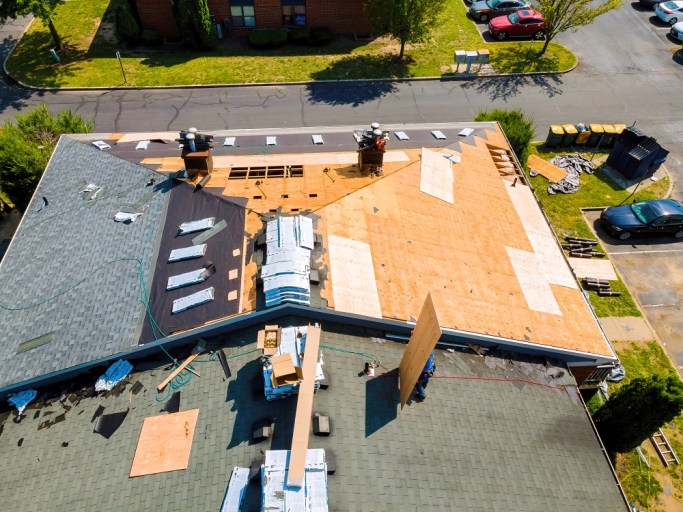
New Jersey follows the International Residential Code, which permits a maximum of two layers of asphalt shingles on a residential roof. If your home already carries two layers, an overlay is not an option and everything comes off.
Stripping two layers takes longer and fills a larger dumpster. If you have been offered a shingle-over, read our breakdown of tear-off versus overlay first.
Deck Inspection and Rot Repair
Once the old roofing is off, the plywood or plank decking underneath is visible for the first time since the last reroof. On an older Succasunna home, this is where schedule surprises usually turn up.
Soft or delaminated sheathing is replaced before anything goes back on. A responsible estimate prices decking as a per-sheet unit rate, so the price is agreed before any rot is found.
Underlayment, Flashing, and Shingle Installation
With a sound deck, the crew installs underlayment, ice and water barrier at the eaves and valleys, and new flashing at every wall, chimney, and pipe. Flashing is slow, detailed work.
Shingles go on last. A well-run roof replacement and installation follows this sequence, because skipping a stage to save a day only moves the problem later.
What Stretches a Succasunna Reroof Past the Original Estimate
Every reroof carries the same short list of variables: layers, hidden deck rot, pitch and access, weather, and material lead time. An honest contractor names them before starting rather than after, and the table below is the one worth walking through with whoever quotes your roof.
| Factor | Effect on the Schedule | What Helps |
|---|---|---|
| Existing shingle layers | Two layers mean a longer tear-off and more disposal | Confirm the layer count at the estimate |
| Hidden deck rot | Adds an unplanned repair stage | A written per-sheet decking rate |
| Roof pitch and access | Slows every stage, not just one | An on-site measurement, not a phone quote |
| Weather windows | Open decking cannot be left in the rain | Strip only what can be dried in daily |
| Material lead time | A product still on order delays the start date | Choose the product before signing |
Weather is the one factor nobody controls, as our look at how weather affects roof installation explains. Together, these five are why a real schedule follows a real measurement, not a phone estimate.
Our guide to preparing your home before installation day covers what to clear so the crew keeps moving once work starts.
Get a Schedule Built Around Your Roof, Not an Average
The useful question is not how long a 2,000 square foot reroof takes in general, but how long yours takes once someone has measured the planes, counted the layers, and checked the access. At Royalty Exteriors, we put that schedule in writing with the scope, so you know the sequence before work starts.
We are a GAF Certified, licensed, and insured contractor, and every project is personal to us. Call us today to book a free estimate and a realistic start date, or send us a message through our contact page.
Frequently Asked Questions
How long does it take to replace a roof on an average house?
There is no single figure for an average house, because the schedule follows the roof rather than the floor plan. The actual time depends on roof area, pitch, access, how many old layers come off, and the weather during that stretch. No responsible contractor commits to a day count before measuring the roof in person.
How many square feet of roof does a 2,000 square foot house have?
More than 2,000, and sometimes far more. Roof area is larger than the footprint because the surface slopes and extends past the walls at the eaves and rakes. A two-story 2,000 square foot home also has roughly half the footprint of a ranch of the same size, so it carries much less roof.
Can a roof be replaced in one day?
It depends on the roof rather than on the crew. A small, simple, single-layer roof with good access is a very different job from a steep, multi-layer roof, and any roof where decking repairs turn up after tear-off takes longer again. Ask for the answer after a measurement, never before one.
Do roofers work in the rain?
Not on open decking. Crews strip only the area they can dry in and cover the same day, because exposed sheathing and an open roof deck let water into the house. Light drizzle sometimes allows work to continue on covered sections, but steady rain stops tear-off entirely.
How many layers of shingles are allowed in New Jersey?
New Jersey follows the International Residential Code, which permits a maximum of two layers of asphalt shingles on a residential roof. If your home already has two layers, a full tear-off is required and shingling over the existing roof is not permitted. Your contractor should confirm the layer count during the estimate.
What happens if the roofers find rotted plywood?
The damaged sheathing is removed and replaced before any new roofing goes down, which adds work that was not visible when the estimate was written. This is why a good contract prices decking replacement as a per-sheet unit rate agreed in advance. You then pay a known rate for whatever is found rather than negotiating mid-job.
Do I need to move out during a roof replacement?
No. Reroofing happens entirely outside the living space, and most families stay home throughout. Expect real noise and vibration during tear-off, so plan around naps, remote meetings, and pets, and move vehicles and anything fragile away from the work area beforehand.
What time of year is best for a roof replacement in New Jersey?
Spring and fall generally offer the most workable stretches of dry, moderate weather, which makes scheduling easier. Roofs are replaced year-round in New Jersey, and an emergency leak should never wait for a season. Winter work is possible but takes more planning around temperature and daylight.
 Roof Tear-Off vs. Overlay in NJ: The Structural Truth Most Contractors Don’t Tell You